Teeth whitening (bleaching) is one of the most effective and popular cosmetic treatments, lightening tooth color without damaging tooth structure.
Introduction:
A beautiful smile with white, radiant teeth has a remarkable effect on facial attractiveness and self-confidence. Many of us face discoloration and yellowing of our teeth because of tea, coffee, smoking, or simply aging. Fortunately, cosmetic dentistry today offers several ways to solve this problem. Tooth bleaching, or teeth whitening, is one of the most effective and popular of these methods, lightening the color of the teeth without damaging their structure. Alongside treatments such as composite and porcelain veneers, whitening is part of the more comprehensive smile makeover in Shiraz and is considered the simplest route to a whiter smile.
In this article, we explain in full what teeth whitening is, how whitening agents work, and how the procedure actually makes teeth whiter. We also review the different ways whitening is performed (in the office and at home) and describe the differences, advantages, and drawbacks of each. How long the results last and how to care for your teeth after whitening are other topics we will cover. Finally, you will find a frequently asked questions section, and we will introduce the best clinic for teeth whitening in Shiraz to receive this service.
What Is Teeth Whitening?
Teeth whitening (bleaching) is a cosmetic dental procedure in which accumulated pigments and yellow or dark stains on the surface of the teeth are removed, making the teeth several shades whiter. The treatment uses special chemical agents called whiteners (bleach) that can lighten the color of natural teeth. It is important to note that whitening only works on natural teeth and does not change crowns, dentures, or restored teeth. The procedure is completely non-invasive; unlike porcelain veneers or crowns, it involves no reshaping or alteration of the tooth enamel. As a result, whitening is one of the most conservative ways to enhance a smile.
Whitening can be used either as a standalone treatment to brighten the teeth or as part of a more complete cosmetic dental plan (for example, alongside orthodontics, veneers, or other treatments). It is suitable for people who have no particular problems with the shape or health of their teeth and simply want their teeth to look lighter and brighter.
How Do Teeth Whitening Agents Work?
The main agents used in teeth whitening are usually hydrogen peroxide or carbamide peroxide. Once applied to the tooth surface, these chemical compounds penetrate the enamel and trigger an oxidation reaction. Put simply, the peroxide in the whitening gel breaks down and oxidizes the color-causing molecules (pigments) within the enamel structure. As a result of this chemical process, the larger, darker molecules that made the teeth look yellow or dark are converted into smaller, lighter ones. The outcome of this change is enamel that looks whiter.
The concentration of the whitening agent directly affects how fast and how much the teeth are whitened. At higher concentrations (usually used in in-office whitening), more oxygen is released and stains fade in a shorter time. At lower concentrations (such as at-home gels), oxidation happens more slowly but steadily, and the teeth gradually become lighter. It is worth noting that standard whitening products provided by a dentist are formulated so as not to harm the enamel. However, improper or excessive use of whitening products can cause side effects such as temporary tooth sensitivity or gum irritation. That is why it is always recommended that whitening be done under a dentist's supervision, to achieve the best result with the fewest side effects.
Teeth Whitening Methods
Professional teeth whitening is done in two general ways: in-office whitening and at-home whitening. Both are carried out under a dentist's supervision and use the same whitening agents (at different concentrations), but they differ in the treatment process, duration, and cost. Below, we describe each of these two methods:
In-Office Teeth Whitening (Office Bleaching)
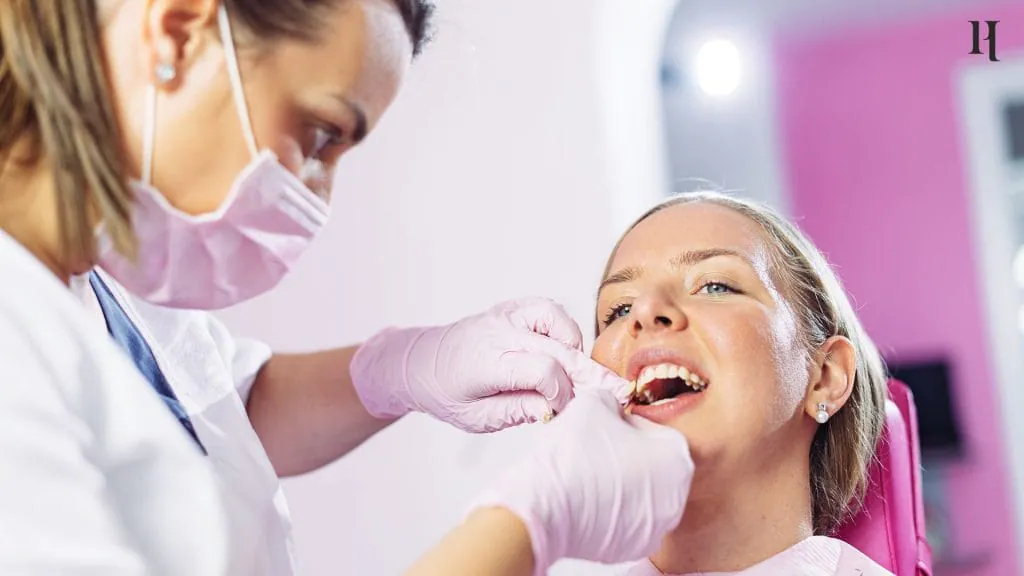
With in-office whitening, every step is performed by the dentist in the clinic. First, the dentist covers the gums and soft tissues of the mouth with a protective gel or special barrier to shield them from contact with the whitening agent. Then a high-concentration whitening gel (usually containing about 30–40% hydrogen peroxide) is applied to the surface of the teeth. This agent quickly begins breaking down the pigment molecules on the teeth and lightens their color within a short time. To speed up and boost the gel's effect, a special light or dental laser is also used in many cases, a technique known as “power bleaching.” By activating the peroxide, the light or laser makes the whitening process faster and deeper.
Each in-office whitening session usually takes about an hour. Depending on how severe the discoloration is and how white the patient wants their teeth, one to three sessions may be needed, spaced a few days to a week apart. The main advantage of in-office whitening is its speed; a noticeable color change can be seen within a single session. Because the procedure is performed by the dentist, safety is also high, and every necessary measure is taken to prevent damage to the gums and enamel. However, in-office whitening usually costs more than the at-home method because it uses more professional materials and special equipment. Also, because of the higher concentration of the agent, some people may experience tooth sensitivity right after the session, which is temporary and resolves within a day or two.
At-Home Teeth Whitening (Home Bleaching)
At-home whitening means that patients whiten their own teeth at home, though under the guidance of a dentist. In this method, the dentist first takes a custom impression of the patient's teeth. This mold, called a tray, is made in the lab within a few days and fits the shape of the patient's teeth exactly. At the next visit, the dentist hands the patient the finished trays and the at-home whitening gel and gives the necessary instructions on how to use them.
At-home whitening gel usually contains carbamide peroxide at a concentration of about 10–20% (equivalent to about 3–6% hydrogen peroxide), which has a milder but continuous whitening effect. The patient places a set amount of gel in the tray for each jaw and, following the dentist's instructions, wears it on the teeth for a specified time each day. Depending on the type of gel and the desired level of whiteness, the gel-filled trays usually need to stay on the teeth for 15 minutes to an hour a day (or, in some cases, overnight while sleeping). The length of at-home treatment varies, but most patients reach their desired whiteness after 1 to 2 weeks of consistent use.
The advantage of at-home whitening is that you can follow the whitening process gradually and with more control. Because the color changes over time, the final result looks more natural and severe sensitivity is less likely. On the other hand, at-home treatment requires the patient's cooperation and patience; unlike the fast in-office method, at home you have to set aside time every day and wait several days to get the desired result. At-home whitening usually costs less than in-office whitening, since most of the work is done by the patient and the materials used are less concentrated. The key point with at-home whitening is that it must be done exactly as the dentist instructs. Using whitening products on your own without a dentist's prescription, or using the trays and gel incorrectly, can damage the gums or lead to uneven results. So even for whitening your teeth at home, you should consult a dentist and follow their guidance.
In-Office vs. At-Home Whitening: A Comparison
Both in-office and at-home whitening can make your teeth whiter and brighter. However, there are important differences between the two, and knowing them will help you make a better choice. Below is a general comparison of the two methods across different aspects:
| Aspect | In-Office Whitening | At-Home Whitening |
|---|---|---|
| Cost | Higher (due to specialized equipment and stronger materials) | Lower (more affordable; much of the work is done by the patient) |
| Speed of results | Very fast – results are visible within one session to at most one week. | Slower – results appear gradually over a few days to a few weeks. |
| How long whiteness lasts | Similar to the at-home method (depends heavily on aftercare and personal habits); a touch-up may be needed after 6 months to 2 years. | Similar to the in-office method (with good oral hygiene and avoiding staining agents, results can last about 1 to 2 years); easy periodic touch-ups are possible by reusing the trays. |
| Safety and side effects | Safe under the dentist's direct supervision; low chance of temporary tooth sensitivity or gum inflammation. | Safe when used correctly as the dentist instructs; incorrect use may cause gum irritation or sensitivity. |
As you can see in the table above, in-office and at-home whitening each have their own advantages and limitations. Choosing between them depends on your needs and priorities. For example, someone who wants white teeth in the shortest possible time for a special occasion (such as a wedding) will probably prefer the in-office method. On the other hand, someone for whom cost matters more and who is in no rush to see results can reach their goal with at-home whitening.
Another point is that the two methods can also be combined. Sometimes the dentist recommends a combination of both: one or two in-office whitening sessions are done first, and then a home kit is given to the patient to continue the process and stabilize the whiteness. This way, you benefit from the speed of the in-office method while the at-home repetitions extend how long the result lasts.
How Long Do Teeth Whitening Results Last?
The whiteness achieved by teeth whitening is not permanent, but with proper care it can be maintained for a considerable time. On average, whitening results (whether in-office or at-home) last roughly 6 months to 2 years. This range varies depending on diet, personal habits (smoking, and colored drinks such as coffee and strong tea), and how much attention you pay to oral hygiene. The more you avoid staining foods and drinks after whitening, and the more consistently you brush and floss, the longer your teeth will stay white.
Of course, even in the best case, the color of the teeth will return to some degree over time, which is perfectly natural. It is usually recommended that you get a whitening touch-up whenever you notice that your teeth have become noticeably less white than at the start of treatment. This timing varies from person to person; some may need a repeat every year, while others remain happy with the result for several years. Fortunately, with at-home trays and supplementary in-office sessions, lost whiteness can easily be restored and your smile kept bright.
Aftercare Following Teeth Whitening
Following a few tips after whitening goes a long way toward preserving the result and reducing possible side effects. Here are the most important recommendations after teeth whitening:
- Avoid colored foods and drinks for the first 48 hours: For up to two days after whitening, the enamel is most prone to absorbing pigments. So during this time, avoid things like strong tea and coffee, colored soft drinks, berries, dark sauces (such as soy sauce), and the like. Also do not smoke, and avoid hookah or other tobacco products, since nicotine can also bring back the discoloration.
- Maintain good oral hygiene: Don't forget to brush with fluoride toothpaste at least twice a day and floss daily. Keeping tooth surfaces clean means fewer new stains form. Using a mild whitening toothpaste can also help the whiteness last longer.
- Use a desensitizing toothpaste: If your teeth become temporarily sensitive to cold and heat after whitening, don't worry. This is normal and goes away within a few days. To help reduce sensitivity, use a toothpaste made for sensitive teeth during this period. You can also rinse your mouth with lukewarm water (not too cold or too hot).
- Avoid acidic foods and drinks: For a day or two after whitening, avoid highly acidic foods and drinks (such as carbonated sodas, lemon juice, or vinegar). Acid can temporarily soften the enamel and make pigment absorption or sensitivity more likely.
- See your dentist for regular checkups: Even after whitening, visit your dentist every 6 months for a checkup and routine scaling. Scaling (professional teeth cleaning) before whitening and regularly afterward helps remove plaque and surface stains and keeps your teeth bright and white.
By following these tips, you can be confident that the whiteness of your teeth will be preserved as much as possible and your attractive smile will last longer.
Frequently Asked Questions About Teeth Whitening
Below, we answer a few common questions about teeth whitening (bleaching):
- Is teeth whitening permanent?
No. The effect of whitening does not last a lifetime and fades over time. As mentioned, it usually lasts between 6 months and 2 years (depending on how well you care for your teeth), after which it can be repeated to maintain the desired whiteness. - Does teeth whitening harm the enamel or have side effects?
No. When done correctly by a dentist or under their supervision, it does not damage the enamel. Standard whitening agents do not cause permanent harm to tooth enamel. The only common and temporary side effect of this treatment is mild tooth sensitivity or slight gum irritation during or after treatment, which usually resolves within 48 hours. Correct use of the gel and protection of the gums by the dentist will prevent serious problems. - Does teeth whitening (bleaching) work on crowns, composite, or veneers?
No. Whitening only lightens natural teeth. If your front teeth have crowns or tooth-colored (composite) restorations, their color will not change with whitening. In such cases, it is usually recommended that whitening be done on the natural teeth first, and then the crowns or restorations be replaced if necessary so they match the new color of the teeth. - Which is better: teeth whitening or porcelain veneers?
These are two completely different procedures, each with its own uses. Whitening is non-invasive and only lightens the color of natural teeth, but it does not correct the shape of the teeth or the gaps between them. Porcelain veneers (laminates), on the other hand, are thin shells bonded to the surface of the teeth that can change their shape as well as make them whiter. The choice between the two depends on your needs: if you are only unhappy with yellowing and the shape of your teeth is fine, whitening is the better option. But if, in addition to color, you have issues such as cracks, chips, gaps between teeth, or irregular shapes, porcelain veneers may be the more suitable solution. To make the right decision, it is best to consult a dentist. (To learn more about veneers, you can read our article on porcelain veneers in Shiraz.) - How often can teeth whitening be repeated?
How often whitening can be repeated depends on the condition of your teeth and your dentist's opinion, but it is usually recommended to leave at least six months to a year between full whitening treatments. Whitening too frequently can increase the risk of tooth sensitivity. Many people have their teeth whitened once a year as part of their cosmetic dental care. You can also use your at-home trays every few months under your dentist's supervision to maintain whiteness, so that a full repeat treatment is needed less often.
Dr. Pooria Hefzollah's Dental Clinic: The Best Clinic for Teeth Whitening in Shiraz
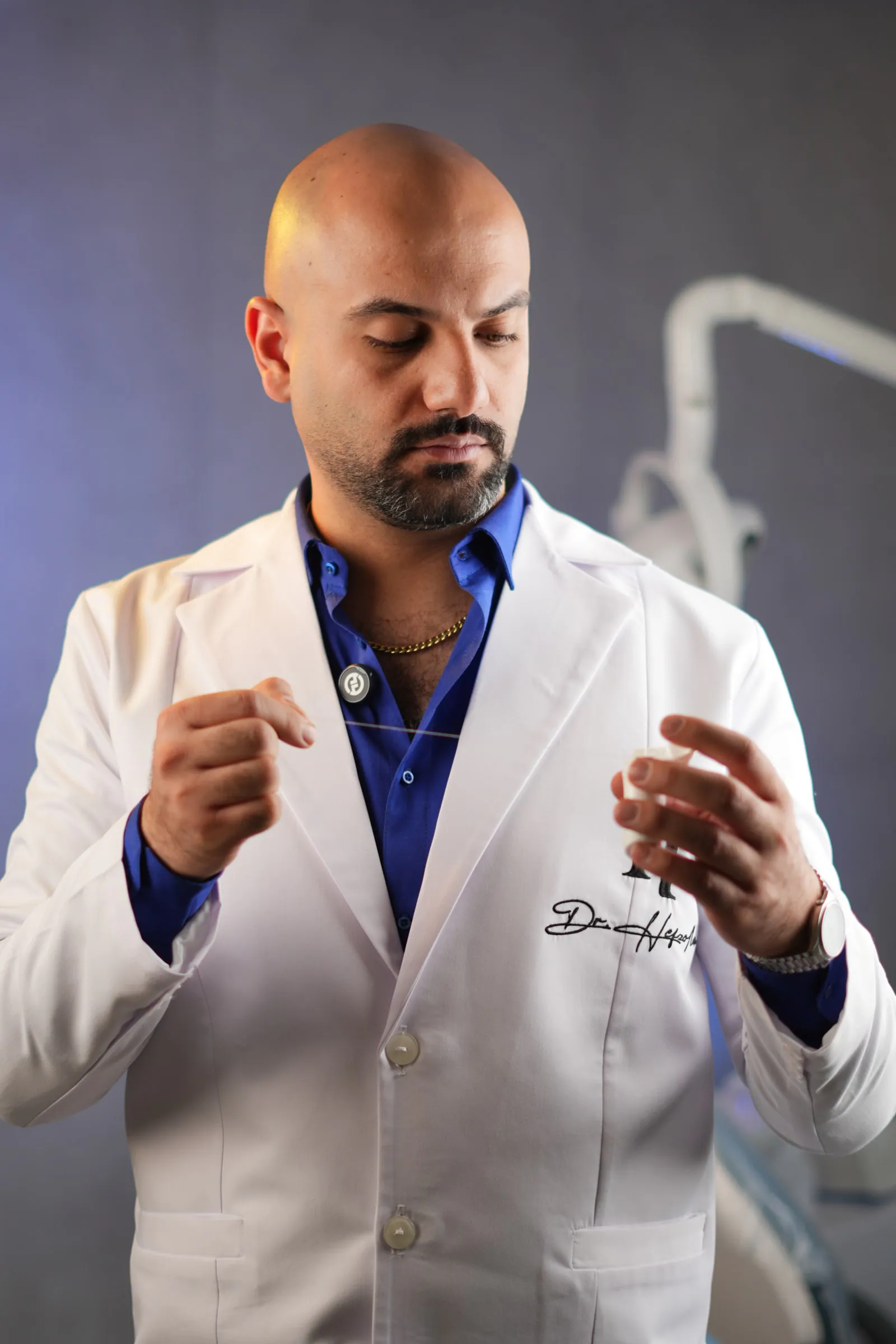
Ultimately, choosing a reputable center for teeth whitening is as important as the treatment itself. If you are looking for the best dental clinic to whiten your teeth in Shiraz, we recommend Dr. Pooria Hefzollah's dental clinic. Thanks to its advanced techniques and experienced staff, this clinic has achieved outstanding results in cosmetic dental treatments, including teeth whitening.
Notable features and services of this clinic include:
- Professional in-office whitening under the direct supervision of Dr. Pooria Hefzollah and his expert team.
- Custom-made trays for at-home whitening, so you can continue whitening at home.
- High-quality, safe whitening gels with recognized approvals.
- Modern dental equipment and the latest light and laser devices to achieve the best results in the shortest time.
- Free consultations to help patients choose the teeth whitening method best suited to their situation.
At Dr. Pooria Hefzollah's clinic, you can confidently entrust your smile to skilled dentists and enjoy a pleasant teeth whitening experience in Shiraz in a calm, professional setting. The beauty and health of your smile are the clinic's priority, and the treatment team does everything it can to give you a bright, satisfying smile.
Written at the studio of
Have a question about this article, or wondering which treatment suits you best? We’ll answer it at your free consultation.